The outlet looked fine. No scorch marks, nothing you’d notice walking past it. What gave it away was the smell in the hallway, sharp and faintly like chlorine, the way air goes right after lightning strikes close by. That outlet had been overheating behind the wall for weeks, and a smell was the only thing announcing it.
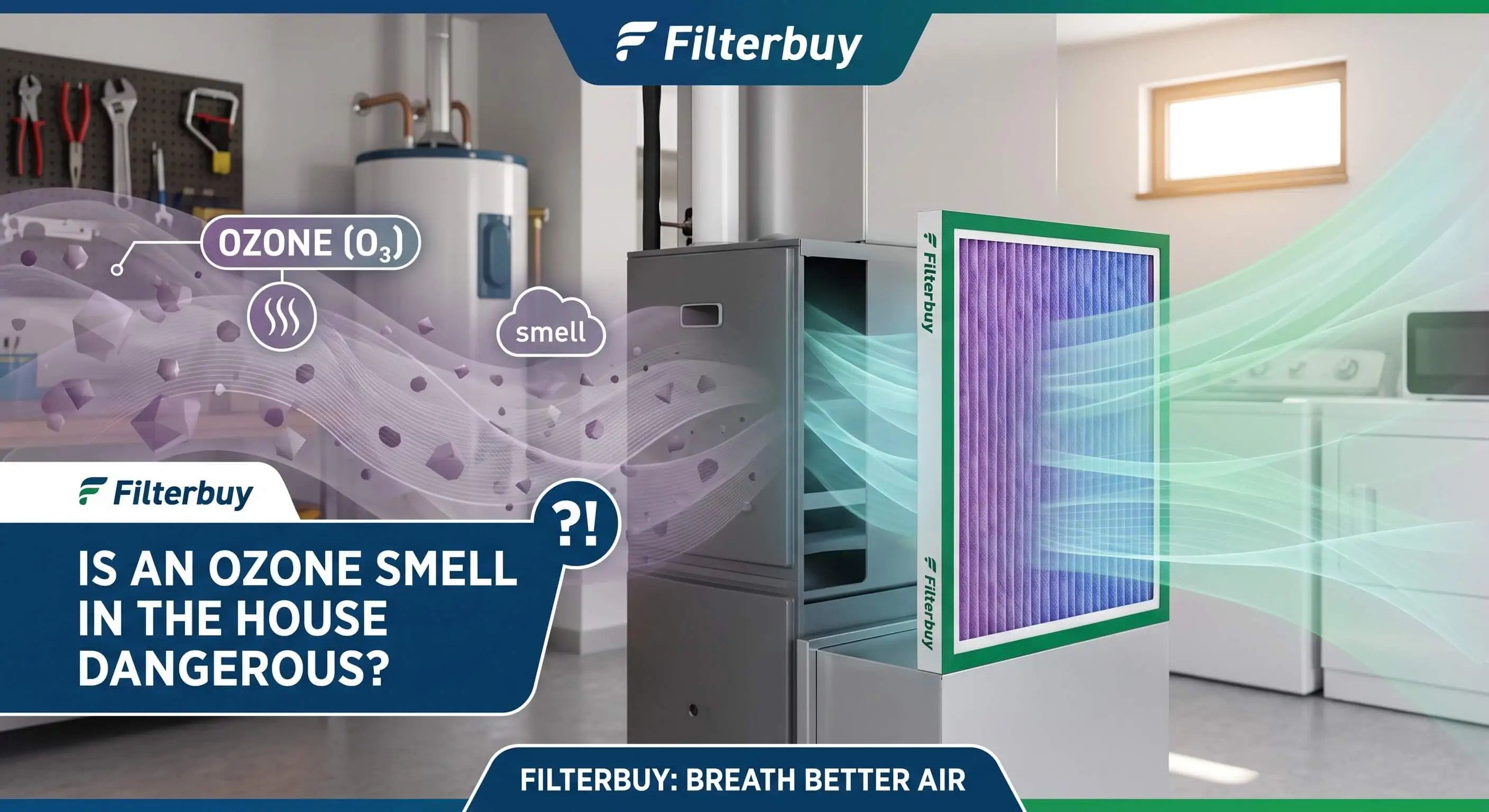
Don't take your indoor air for granted. You can't see ozone, but you can absolutely smell it, and learning what does ozone smell like and what it's telling you turns your nose into the cheapest diagnostic tool in the house.
TL;DR Quick Answers
What Does Ozone Smell Like?
Ozone smells sharp and metallic, closest to chlorine or bleach. Most people recognize it as the crisp electric tang in the air just before a thunderstorm breaks. Your nose catches it at very low concentrations, so if you can smell it indoors, it's already worth tracking down the source.
Closest match: chlorine or bleach, like walking past an indoor pool
Also described as: hot metal, a spark, or the air right after lightning
Where it matters: outdoors after a storm it's harmless, indoors it usually points at a source
When it's urgent: an ozone or burning smell near an outlet or wiring can mean electrical arcing, so cut power to that circuit and call a licensed electrician
Top Takeaways
The smell is distinctive. Sharp and metallic, closest to chlorine or bleach, sometimes described as the air before a storm.
Location changes everything. Outdoors after lightning it’s harmless. Indoors it usually means your house is flagging something.
One source is urgent. An ozone or burning smell near wiring can mean electrical arcing, so cut power to that circuit and call a licensed electrician.
One source is an emergency and isn’t ozone at all. A rotten egg or sulfur smell suggests a gas leak. Leave and call your utility or 911.
Removal means source removal. Ozone breaks down on its own once the source stops, ventilating speeds that up, and filtering won’t remove the gas.
What Does Ozone Smell Like, Exactly?
People describe it several different ways and they’re all right. Chlorine or bleach comes up most. Some say hot metal, or the smell of a spark. Others land on clean and crisp, that tang in the air before a storm breaks.
Your nose is the sensitive instrument here. It catches ozone well below anything a consumer meter would register, which hands you a rule worth keeping. If you can smell it indoors, it’s already worth tracking down.
Telling It Apart From the Smells People Confuse It With
Sharp and metallic covers more than one household problem, and mixing them up is how people miss the one that matters:
Burning plastic or hot insulation is harsher and meltier, more scorched than sharp, and it shows up while one outlet or appliance is running.
Musty, damp, or earthy smells like a wet basement, and it tends to arrive when the air handler kicks on. That points at moisture or mold in the system.
Sour and stale, the gym sock smell hits right after the AC starts. Usually that’s bacteria on a damp coil.
Rotten eggs or sulfur isn’t ozone, and it isn’t a wait-and-see problem. Leave the house and call your gas utility or 911.
If you want these lined up side by side, this comparison of how to tell an ozone smell apart from the odors it gets confused with, including a musty AC smell, adds the timing clues that give each source away.
Where the Smell Comes From Inside a House
Once I’m confident it’s ozone, I work down this list. Order matters here, because the first item is the only one that can burn a house down.
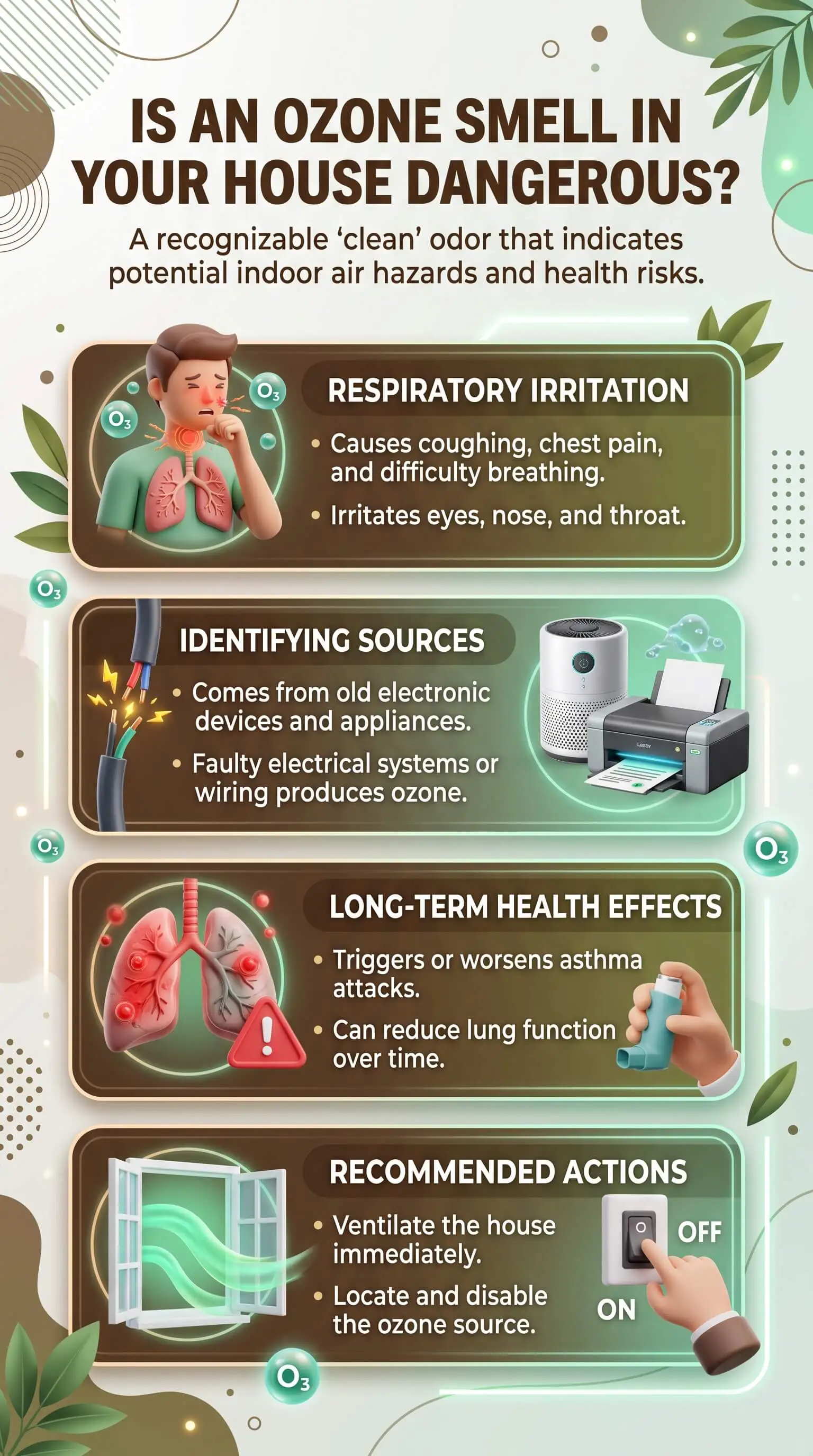
An outlet, switch, or appliance, sometimes with a faint buzz or a warm faceplate. That’s electrical arcing. Overheating wiring throws sparks, that discharge splits oxygen into ozone, and a chlorine or hot-metal smell near wiring counts as a warning sign. Kill that circuit at the breaker and get a licensed electrician to inspect it before anything else happens.
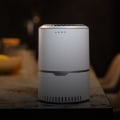
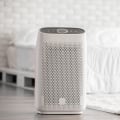
An air purifier or ionizer you’ve had running. Plenty of them make ozone on purpose or as a byproduct. Shut it off while people and pets are in the room, then open a window.
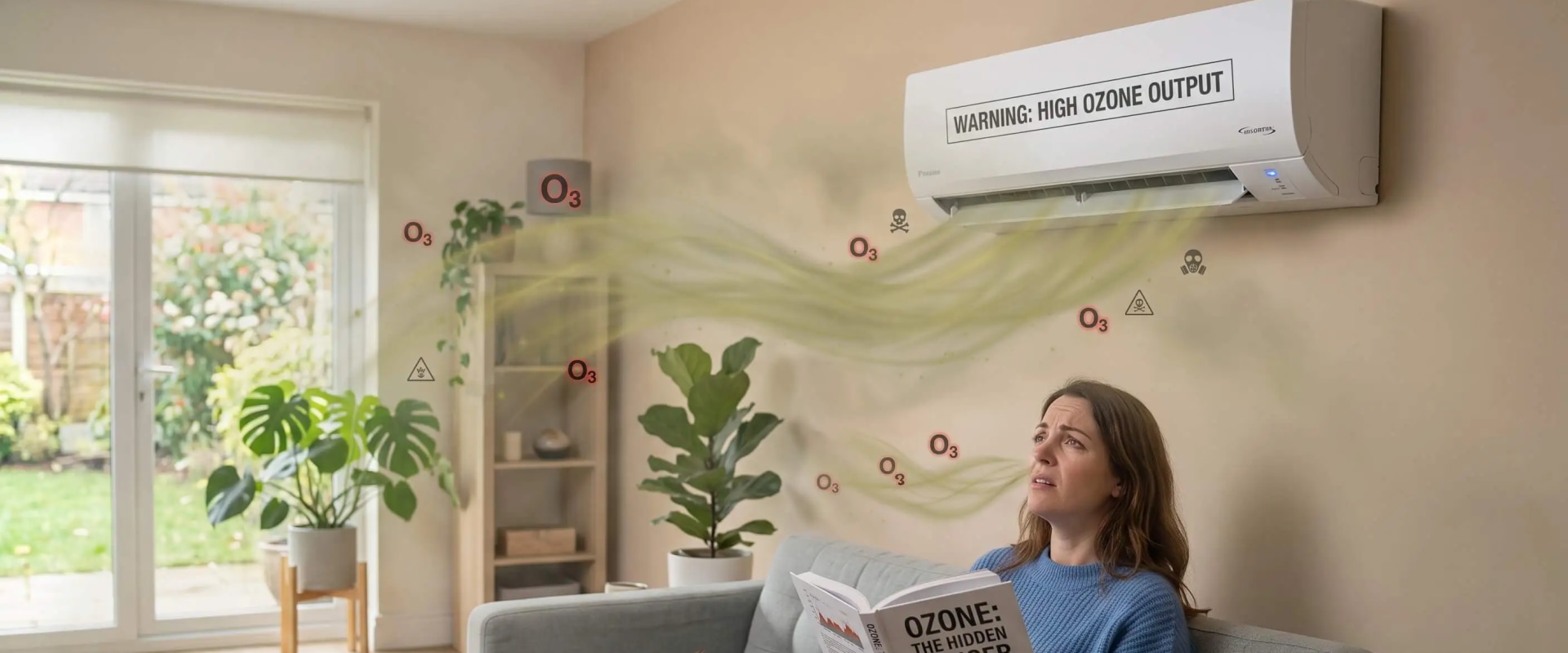
The HVAC system, usually right after it starts. Some UV-C lamps inside air handlers give off ozone. If the smell’s new or strong, have it checked.
Hot, sunny afternoons with the windows open. Ground-level ozone forms outdoors when emissions react in sunlight, then drifts in. Low stakes, so close the house up through the worst of the heat.
A laser printer or copier in a small room. Also low stakes, and better ventilation handles it.
Why Something Harmful Smells Clean
Here’s the part that bothers me. We’ve all felt that sharp scent under storms and mountain air, so it reads as freshness even when it’s working as a warning. The name itself came from the Greek word for smelling, which tells you how much the odor stood out to the chemist who first isolated it in 1839.
And one correction, because almost everyone has this backwards. The earthy smell after rain isn’t ozone. That’s petrichor, mostly geosmin, a compound soil bacteria release when raindrops land. The sharp electric smell during the storm, off the lightning, is the ozone. Keeping a clean MERV 8 pleated HVAC air filter in your HVAC system promotes healthy airflow and better indoor air quality, making it easier to focus on unusual odors that deserve further investigation.
Getting Rid of It
Ozone’s unstable. It breaks back down into ordinary oxygen once the source stops, which reframes the whole job around removing the source rather than scrubbing the air.
So find what’s making it and stop it, whether that means unplugging a device, killing a breaker, or shutting a window. Open windows and run fans. Call an electrician for anything electrical, get everyone out for a suspected gas leak, and know what your filter can’t do. Pleated and HEPA media trap particles, not ozone gas.
“In twenty-two years of residential service calls, an ozone smell near an outlet has never once turned out to be nothing. It’s the only household odor I tell homeowners to act on the same day.”
7 Essential Resources
Why Your “Air Purifier” Might Be the Source
The federal review explains why ozone-generating devices don’t clean indoor air at safe levels, and it names the marketing terms that make ozone sound healthy. U.S. Environmental Protection Agency
Ozone’s Exposure Limits and Symptoms
Exposure numbers, symptoms, and target organs on one page, which is what professionals work from. NIOSH Pocket Guide to Chemical Hazards
Who in Your House Is Most at Risk
Children, older adults, people with asthma, and anyone who exercises outdoors all carry more risk. American Lung Association
How to Check Outdoor Ozone First
On hot afternoons the ozone drifting inside came from outdoors, so look the number up before you crack a window. AirNow Air Quality Index basics
Home Wiring Warning Signs, Room by Room
Odors from overheated wiring sit here alongside arcs, sparks, buzzing, and warm faceplates. Read it once and you’ll notice different things in your own house. CPSC Guide to Home Wiring Hazards
What Researchers Find About Indoor Air
Indoor air gets less attention than outdoor air, and work on short-term ozone exposure shows why that gap matters. National Institute of Environmental Health Sciences
The Chemistry of the After-Lightning Smell
Lightning and smaller electrical discharges both create ozone, which is why an arcing outlet smells like a storm. NOAA Air Resources Laboratory
These trusted resources explain how to identify ozone, recognize when it signals an electrical hazard, and know when professional HVAC system repair may be needed to address equipment-related sources and improve indoor air quality.
3 Statistics
Arcing faults cause more than 30,000 U.S. home fires a year, along with more than $750 million in property damage. That’s why the electrical source sits at the top of my list instead of the bottom. Electrical Safety Foundation International
Some people can smell ozone at concentrations as low as 0.05 parts per million. Sensitivity swings widely, which is why one person in a house insists something’s wrong while nobody else notices a thing. California Air Resources Board
The workplace exposure limit for ozone is 0.1 parts per million as an eight-hour average. Your house isn’t a workplace, but the number shows how little it takes before regulators treat ozone as worth controlling. OSHA Annotated Table Z-1
These numbers show why an ozone smell should never be ignored. While high quality air filters help reduce dust, pollen, and other airborne particles for healthier indoor air, identifying and eliminating the source of ozone remains the most important step when that sharp electrical odor appears indoors.
Final Thoughts and Opinion
My honest opinion is that the marketing language causes more trouble than the gas does. Calling ozone energized oxygen or pure air trains people to read a warning as a sign of cleanliness, and that inversion is what leaves someone standing in a hallway wondering whether a sharp smell is good news. It’s information. Treating it as reassurance is how a small problem gets weeks to grow into a big one.
I’ll be fair about the other direction too. Most household ozone smells aren’t emergencies. A printer in a stuffy office, a hot afternoon with the windows cracked, an ionizer somebody left running. None of that warrants panic. The skill worth having is sorting the low-stakes sources from the one that can’t wait, and you’re the person best positioned to do it, because you’re the one who can smell it.
Frequently Asked Questions
Does ozone really smell like chlorine?
Yes, and it’s the comparison most people reach for. Both are strong reactive oxidizers, so the resemblance is chemical rather than coincidental. Hot metal and electric come up plenty too.
Why does my car smell like ozone?
Usually an electrical fault in a motor, blower, or wiring harness, an aftermarket ionizer, or outdoor ozone pulled through the vents on a hot day. A persistent one needs checking.
Is the smell after rain ozone?
Not the earthy part. That’s petrichor, mostly geosmin released by soil bacteria when raindrops land. The sharp electric smell during the storm, off the lightning, is the ozone.
Can an air filter remove an ozone smell?
A pleated or HEPA filter captures particles rather than gases, so it won’t clear an ozone odor. Activated carbon can reduce ozone, though capacity fades and it’s no substitute for finding the source.
Should I worry if the smell keeps coming back?
A recurring smell means the source is still active, so keep looking. Ozone dissipates fast once whatever produces it stops, which makes persistence a useful signal rather than something to live with.
Trust Your Nose and Follow the Smell to Its Source
A smell you can name is a problem you can solve, and the list above narrows it down faster than guessing will. Walk the rooms where it’s strongest, note what was running when you caught it, and start with whichever source matches.