One morning the lake breeze keeps everything clear. By afternoon, ozone builds up along the expressways, or smoke from a wildfire hundreds of miles away rolls in and turns the sky a strange shade of orange. Understanding Chicago air quality makes it easier to choose the best time for outdoor activities, so I put together this checklist after I got tired of guessing. It's the exact five-step routine I run through before a run, a trip to the park with my kids, or a day with the windows left open.
TL;DR Quick Answers
chicago air quality
Chicago's air quality shifts fast. Lake winds, expressway traffic, and wildfire smoke from hundreds of miles away can move the AQI from good to unhealthy within hours. I check the live reading before deciding how to spend time outside, not after I'm already out.
Check first: Pull up today's AQI before you plan anything outdoors.
Watch ozone: It peaks on hot, sunny afternoons, especially near expressways.
Watch smoke: PM2.5 spikes when wildfire smoke drifts in from Canada.
Protect sensitive groups: Kids, older adults, and anyone with asthma or COPD need a lower AQI threshold than everyone else.
Top Takeaways
Check the AQI before deciding how to spend time outdoors, not after you're already out
Ozone tends to peak on hot, sunny afternoons, while wildfire smoke can spike PM2.5 levels any time of year
Kids, older adults, and anyone with asthma or COPD should use a lower AQI threshold than everyone else
Cook County's Air Pollution Action Day alerts are worth subscribing to, not just skimming
Here's the routine I use.
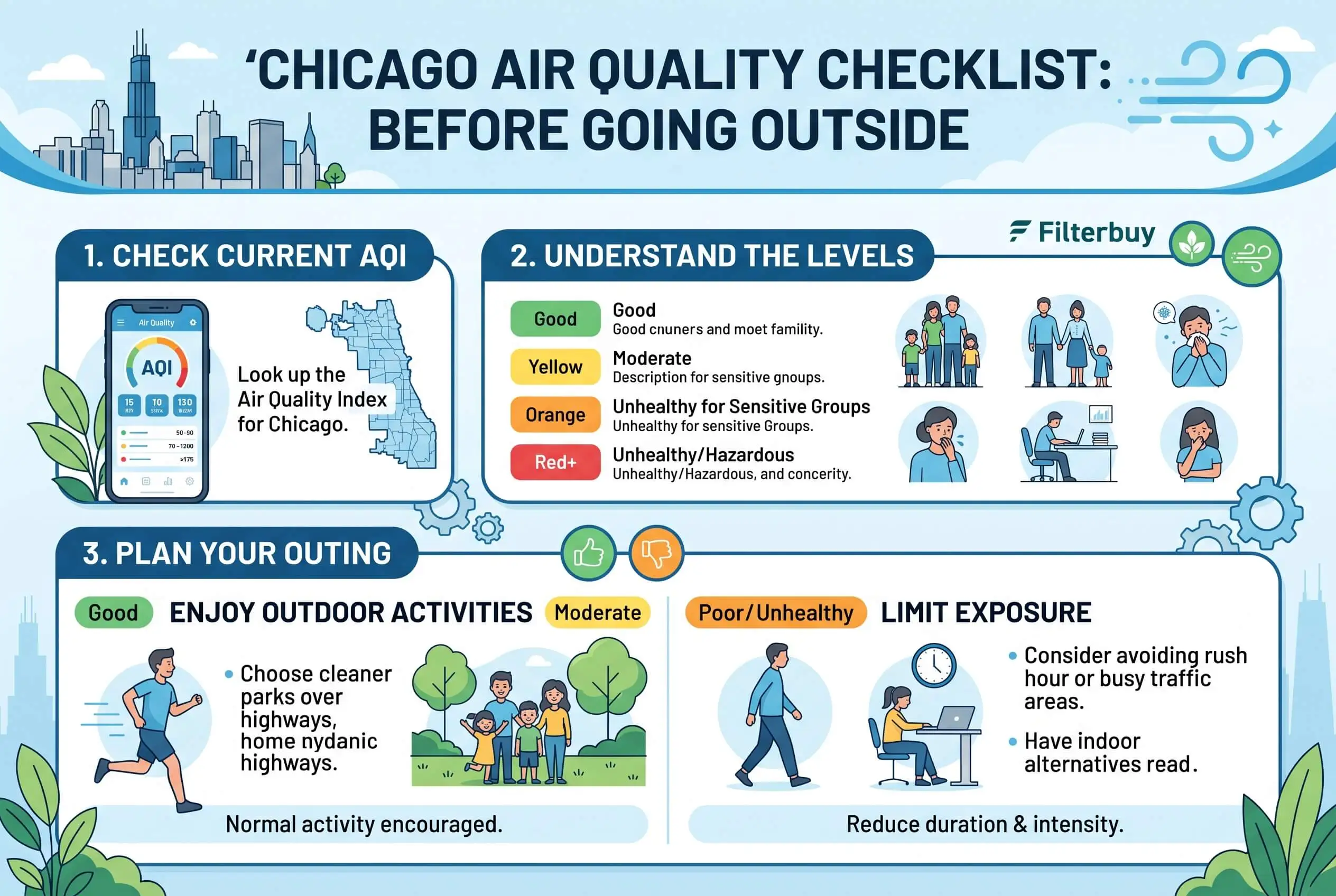
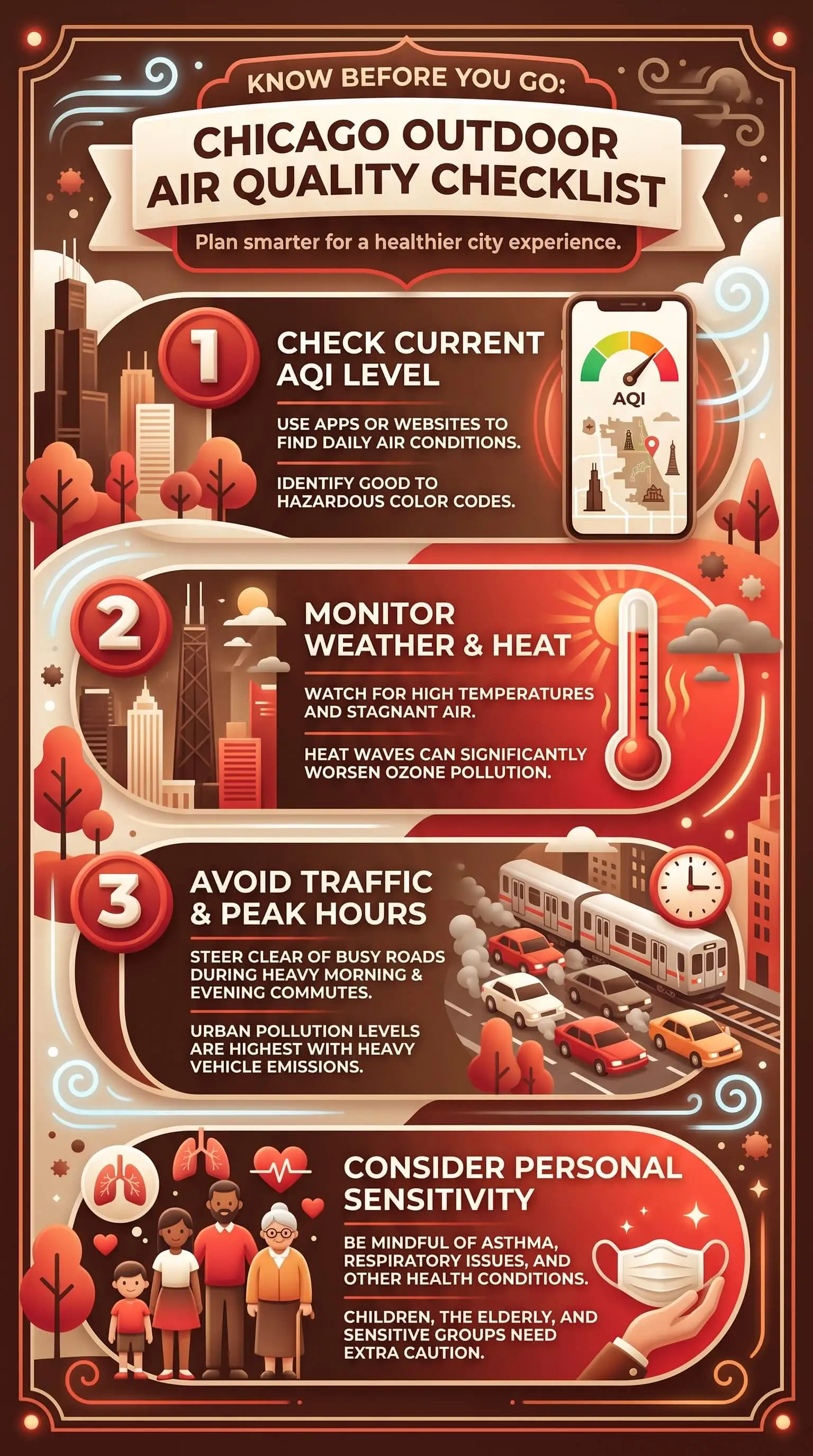
Check today's AQI first. I pull up the live Chicago AQI map before I decide anything else about my day. Air quality here can swing from good to unhealthy for sensitive groups within a matter of hours, especially in summer.
Figure out which pollutant is driving the number. Ozone tends to peak on hot, sunny afternoons. Fine particle pollution, or PM2.5, tends to spike when wildfire smoke drifts in from Canada or when wind kicks up dust and vehicle exhaust along the highways.
Match my plans to the AQI tier. Below 100, I don't think twice. Between 101 and 150, I still go outside, but I dial back anything strenuous, especially near traffic. Above 150, I move workouts indoors and keep outdoor time short.
Check for an active alert. Cook County and the surrounding area sometimes issue an Air Pollution Action Day when forecasters expect unhealthy air for two or more days in a row. I've learned to actually read those instead of scrolling past them, and to make sure my 16x20x1 HVAC furnace air filter is ready to help keep indoor air cleaner whenever outdoor pollution levels are expected to remain high.
Plan around the clock, not just the day. Ozone usually peaks in the afternoon, so I try to get outdoor activity done in the morning when the forecast looks marginal.
Asthma and allergy issues run in my own household, which is honestly why I started paying attention to home air quality testing in the first place.
“I used to treat air quality like background noise. Once I started checking it the same way I checked the forecast, I stopped getting caught off guard by bad ozone days or smoke rolling in from hundreds of miles away.”
7 Essential Resources
Check the Live AQI Before You Head Out
AirNow AQI Basics breaks down what each color and number on the scale actually means, straight from the EPA.
See Illinois' Daily Forecast and Action Day Alerts
Illinois EPA Outdoor Air posts the state's daily air quality forecast and explains when a Chicago-area Air Pollution Action Day gets called.
Get Health Guidance for Wildfire Smoke Days
Illinois Department of Public Health: Wildfire Smoke covers who's most at risk and how to protect your household when smoke drifts in from out of state.
Track Hyperlocal Readings Across Chicago Neighborhoods
Open Air Chicago is the city's network of nearly 300 sensors giving block-by-block PM2.5 and NO2 readings.
Sign Up for County-Wide Air Quality Alerts
Cook County Air Quality Guidance explains how to subscribe to AlertCook text alerts and what to do when an alert is active.
Check the Fire Weather Outlook
National Weather Service Fire Weather shows current fire weather conditions and outlooks that can affect regional smoke and air quality.
Prepare Your Household for Smoke Events
Ready.gov: Wildfires walk through practical steps for keeping indoor air cleaner when outdoor conditions turn unhealthy.
3 Statistics
The EPA sets its ozone health standard at 0.070 parts per million, averaged over eight hours. That's the benchmark regulators use to decide when ozone in a given area turns unsafe.
The American Lung Association's 2026 State of the Air report found that the Chicago-Naperville metro area logged 18 unhealthy ozone days over the year and ranked 15th worst out of 226 metro areas nationally, earning an F grade.
CDC data puts current adult asthma prevalence in Illinois at 8.4 percent, a meaningful share of the population that needs to pay closer attention on higher AQI days.
These statistics show why checking Chicago's AQI before spending time outdoors matters, while using top air filters can help maintain cleaner indoor air on days when ozone levels and pollution are elevated.
Final Thoughts and Opinion
I don't think Chicago's air deserves anxiety. It deserves the same five-second glance I already give the weather app before deciding on a jacket. Since I started checking the AQI as part of that same glance, bad days stop surprising me, and I stop losing planned outdoor time to conditions I could have seen coming a mile away. That's not caution. It's just paying attention, and pairing that habit with a MERV pleated furnace filter helps keep the air inside my home cleaner when outdoor pollution levels rise.
 Frequently Asked Questions
What AQI is considered unhealthy in Chicago?
An AQI above 100 is unhealthy for sensitive groups, and above 150 is unhealthy for the general public. Chicago can reach either range on hot ozone days or during wildfire smoke events, making a MERV 8 filter a practical option for helping improve indoor air quality when it's best to stay inside.
Does Chicago issue air quality alerts?
Yes. The Chicago metro area uses Air Pollution Action Days when the Illinois EPA forecasts unhealthy air for two or more consecutive days, and Cook County residents can subscribe to text alerts through AlertCook.
Why does Chicago's air quality change so quickly?
Lake Michigan's wind patterns, traffic along the expressways, and long-distance wildfire smoke can all shift AQI readings within a matter of hours.
Should I wear a mask outside in Chicago on bad air days?
A properly fitted N95 or N100 respirator offers real protection during unhealthy air or smoke events. Cloth and surgical masks won't filter out the fine particles involved.
CTA
Give the air quality a five-second check before you head out. It's a small habit, and it makes the difference between planning around Chicago's air and getting caught off guard by it. Pairing that habit with the best furnace filter helps keep your indoor air cleaner when outdoor conditions are less than ideal.