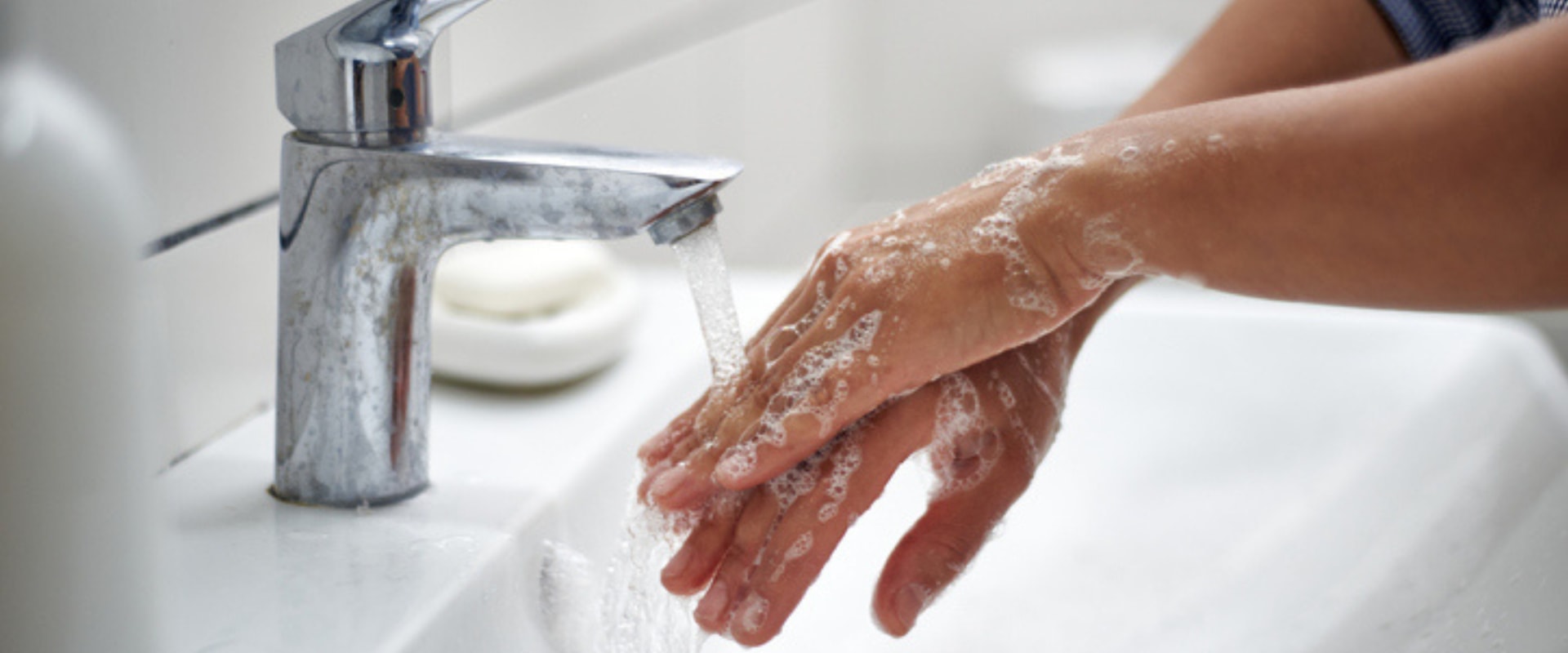
What we learned after our children reacted to products marketed as both antibacterial and gentle:
Antibacterial soap targets germs chemically — but leaves barrier-stripping residue behind
Hypoallergenic soap protects the skin barrier — but the term is unregulated and widely misused
The FDA banned 19 common antibacterial ingredients from consumer soap in 2016 — ingredients still appearing in products on shelves today
Frequent handwashing does more barrier damage than most soaps are designed to address
Physical removal of germs outperforms chemical killing for skin that needs to stay intact
This page covers what two years of formulation research, independent Swiss laboratory testing, and raising children with sensitive skin taught us about what safe and effective hypoallergenic hand soap actually requires — and why the answer looks nothing like what most labels promise.
We are Dr. Ruslan Maidans and Dr. Yalda Shahriari — a dentist and a biomedical engineer. We built NOWATA because the product our families needed did not exist. What follows is everything we wish we had known before we started looking.
TL;DR Quick Answers
What Is Hypoallergenic Hand Soap?
Hypoallergenic hand soap is formulated without the most common skin sensitizers — fragrances, SLS, parabens, alcohol, and dyes. The problem: the FDA does not regulate the term. Any brand can print "hypoallergenic" on a label without a single test to back it up.
What the label should mean but legally doesn't:
Free of synthetic fragrances and hidden fragrance compounds
Free of SLS and harsh surfactants that strip the skin barrier
Free of parabens, alcohol, and artificial dyes
pH-balanced between 4.5 and 5.5 to match healthy skin
Independently tested and verified by a third party
What we learned after our daughter reacted to products marketed as hypoallergenic:
Front-of-label claims are marketing decisions
The ingredient list is the only honest part of the label
Independent lab verification is the only claim worth trusting
NOWATA was built on that lesson. Every ingredient is evaluated against sensitization research. Every efficacy claim is verified by independent Swiss laboratory testing. No exceptions made because a word on the front of the bottle implied safety it was never required to prove, especially when it comes to waterless hand soap.
Top Takeaways
"Antibacterial" and "hypoallergenic" are both unregulated marketing terms — not clinical standards.
FDA banned the two most common antibacterial ingredients in 2016
FDA has no regulatory definition for "hypoallergenic"
Any brand can use either term without proof or testing
We trusted both labels for our own children — and our daughter's skin still reacted
Labels can say anything. Ingredient lists cannot hide.
The wet-dry cycle is the hidden risk factor neither category addresses.
NIH research: 8 to 10 daily washes raises hand eczema risk by 51% — regardless of soap type
Switching soap addresses chemical irritation
It does not address mechanical barrier damage accumulating across every wash-and-dry cycle
We stopped asking which soap was gentler when we understood the cycle itself was the problem
Removing germs is more complete than killing them.
Antibacterial soap kills pathogens and leaves dead residue and harsh chemicals on skin
That residue transfers to every surface and person touched afterward
NOWATA's clumping technology physically lifts germs, dirt, and oil off entirely
Brush the clumps away — everything goes with them
Nothing left on skin means nothing left to transfer
Swiss lab ASTM E1174 testing confirmed: 99.9% removal of bacteria and viruses
Clean results. No chemical trade-off.
Sensitive skin is not a niche concern — it is the clinical reality for nearly 1 in 3 Americans.
84.5 million Americans have a diagnosed skin condition
31.6 million have eczema symptoms
10.8% of U.S. children have diagnosed eczema
Product categories claiming to serve these families are built on unverified claims and self-declared testing
The gap between what labels promise and what ingredients deliver is not a minor inconsistency — it is a systemic failure
It affected tens of millions of families. It affected ours.
Doctor-created and independently verified is not the same as dermatologist tested.
"Dermatologist tested" requires no standard, no outcome, no independent review
NOWATA was formulated by a dentist and a biomedical engineer who are parents of children with sensitive skin
Every efficacy claim verified by independent Swiss laboratory testing using medical-grade protocols
Tested on our own children before anyone else's
That accountability is not a selling point — it is the only standard we have ever trusted
What Antibacterial Soap Actually Does
Antibacterial soap uses chemical agents — most commonly triclosan and triclocarban — to kill germs on contact. The mechanism sounds effective. The reality is more complicated.
What the research and regulatory record shows:
The FDA banned 19 antibacterial ingredients from consumer hand soap in 2016
The ruling cited lack of evidence that antibacterial soap outperforms plain soap and water
Banned ingredients were linked to hormone disruption and antibiotic resistance
Chemical killing leaves dead germ residue and harsh surfactants on skin after every wash
That residue does not rinse clean — it transfers to every surface skin touches afterward
What we found when we analyzed the category:
Many antibacterial products reformulated after the ban — replacing flagged ingredients with alternatives facing similar scrutiny
The marketing changed. The underlying approach did not.
Killing germs and removing them are not the same thing. Most antibacterial soaps only do one.
What Hypoallergenic Soap Actually Does
Hypoallergenic soap is formulated without the most common skin sensitizers. The goal is to clean without triggering an immune or inflammatory response in reactive skin.
The problem: "hypoallergenic" has no federal regulatory definition. Any brand can use it without a single clinical test.
What a genuinely hypoallergenic formula requires:
Free of synthetic fragrances — one "parfum" entry can hide dozens of undisclosed allergens
Free of SLS and harsh surfactants that strip the skin barrier with every wash
Free of parabens, alcohol, and artificial dyes
pH-balanced between 4.5 and 5.5 to match healthy skin
Independently verified — not self-declared
What we witnessed in our own home:
Our children reacted to products carrying every hypoallergenic claim available
We pulled ingredient lists on products labeled gentle, dermatologist tested, and newborn safe
Every known sensitizer we were trying to avoid appeared in at least one of them
The label was a marketing decision. The ingredient list was the product.
Why the Comparison Misses the Bigger Problem
Most people frame this as a choice between killing germs and protecting skin. We spent two years learning that framing is wrong.
The real problem is the wet-dry cycle:
Traditional handwashing — soap, water, rinse, dry — strips natural oils from skin with every repetition
NIH research confirms 8 to 10 washes daily raises hand eczema risk by 51%
At 15 to 20 washes daily the relative risk reaches 1.66
Frequent handwashers — caregivers, healthcare workers, food service professionals — absorb that damage across dozens of daily cycles
Neither antibacterial nor hypoallergenic soap addresses the mechanical damage the wet-dry cycle creates
What this means practically:
Antibacterial soap kills germs but compounds barrier damage with harsh chemistry
Hypoallergenic soap reduces chemical irritation but still requires rinsing and drying
Neither eliminates the cycle doing the most cumulative damage to skin washed repeatedly throughout the day
Why Physical Removal Outperforms Chemical Killing
When we started formulating NOWATA, we stopped asking which chemicals killed germs most effectively. We started asking how to remove them completely — without leaving anything behind.
What independent Swiss laboratory testing using ASTM E1174 medical-grade protocols confirmed:
99.9% physical removal of bacteria including E. coli
99.9% physical removal of viruses including Murine Norovirus — a human norovirus surrogate
Complete removal with no water, rinsing, towels, or residue left on skin
Why removal outperforms killing for skin that needs to stay intact:
Killing leaves dead germ residue on skin — removal takes everything with it
No residue means nothing transfers to surfaces, food, or the people you touch afterward
No rinse-dry cycle means no mechanical stripping of the skin barrier with every wash
Skin stays intact — which is the barrier doing the actual work of keeping germs out between washes
The insight that changed how we think about hand hygiene:
An intact skin barrier is not a comfort benefit — it is a hygiene benefit
Compromised skin harbors bacteria in micro-fissures that soap cannot reach
Protecting the barrier is not the alternative to killing germs — it is part of the same goal
Which Soap Works Better
The answer depends on what working better actually means when choosing a vegan zero-waste hand soap.
If the goal is maximum chemical germ kill with no regard for skin:
Antibacterial soap delivers that — with known trade-offs in barrier damage, residue transfer, and a regulatory record that should prompt scrutiny
If the goal is gentle cleaning that avoids sensitization:
A genuinely hypoallergenic formula — independently verified, not self-declared — reduces chemical irritation
It does not eliminate the wet-dry cycle damage compounding across daily washes
If the goal is complete germ removal, intact skin, and nothing left behind:
Neither category as traditionally formulated achieves all three simultaneously
That gap is what NOWATA was built to close — not as a marketing position but as a clinical decision made by two physicians who needed the answer for their own families first
"The antibacterial versus hypoallergenic debate assumes the only variable that matters is what the soap does to germs. As a biomedical engineer, I understood why that framing was incomplete before we ever started formulating. As a mother watching her daughter react to every product carrying a gentle claim, I understood why it was dangerous. The question we kept returning to was not which soap killed more effectively — it was what the soap left behind after it did. Dead germ residue. Stripped barrier lipids. Micro-fissures that harbor the bacteria the soap was supposed to eliminate. We were treating the surface and damaging the system meant to protect it. NOWATA was our answer to that contradiction. Not because we saw a gap in the market. Because we were living inside the gap — and our daughter's skin was the one paying for it."
Essential Resources
1. The FDA Admits "Hypoallergenic" Means Nothing Legally
We trusted this word for years. Our daughter's hands still turned red. The FDA confirms no federal standard exists for "hypoallergenic" — any brand can print it without a single test. Before you trust any label, start here.
https://www.fda.gov/cosmetics/cosmetics-labeling/hypoallergenic-cosmetics
2. The FDA Banned 19 Antibacterial Ingredients — Here Is Why That Still Matters
We watched patients develop sensitivities to ingredients marketed as protective. In 2016, the FDA agreed — banning triclosan, triclocarban, and 17 additional antibacterial agents after manufacturers failed to prove they were safe or more effective than plain soap and water. If a product still makes antibacterial claims today, this ruling is essential reading.
3. The Only Independent Verification System Worth Trusting for Sensitive Skin
After cycling through dozens of products marketed as gentle, we learned one thing: third-party verification matters more than any front-label claim. The National Eczema Association Seal of Acceptance directory is one of the few resources where products face independent review — not self-declaration. We recommend it to every family navigating sensitive skin.
https://nationaleczema.org/eczema-products/
4. The Ingredient List Behind Most Skin Reactions to Hand Soap
As a biomedical engineer and a dentist, we pulled ingredient lists on every product our children reacted to. The same culprits appeared every time. The American Academy of Dermatology identifies the most common contact dermatitis triggers — the clinical guide for cross-checking what is actually inside products marketed as gentle. If an ingredient appears here and on your label, the front of the bottle is not telling the truth.
https://www.aad.org/public/diseases/eczema/types/contact-dermatitis/causes
5. Why How Often You Wash Matters as Much as What You Wash With
This is the research that changed how we think about hand hygiene entirely. NIH peer-reviewed data confirms that 8 to 10 handwashes daily raises hand eczema risk by 51% — regardless of soap chemistry. We spent two years telling patients to wash more. Then we watched our daughter flinch every time she walked to the sink. This study reframes the entire conversation. The wet-dry cycle is a clinical risk factor — not a comfort issue.
https://pmc.ncbi.nlm.nih.gov/articles/PMC9111880/
6. The Federal Science Behind Sensitive Skin and Barrier Dysfunction
We follow the peer-reviewed research. This NIH resource on atopic dermatitis covers what the skin barrier actually does, how it breaks down, and what that means for anyone selecting soap for reactive or eczema-prone skin. It is the clinical foundation behind why we formulated NOWATA the way we did — and why protecting the barrier is not separate from hand hygiene. It is part of the same goal.
https://www.niams.nih.gov/health-topics/atopic-dermatitis
7. The Most Clinically Current List of Confirmed Contact Allergens
When we analyzed the ingredient lists of every product our children reacted to, we cross-referenced each one against the American Contact Dermatitis Society Core Allergen Series — the same standard dermatologists use. If an ingredient appears on this list, no front-label claim overrides it. This is the resource we wish every parent had before their first product purchase.
https://www.contactderm.org/resources/core-allergen-series/
Supporting Statistics
We did not set out to become researchers. We set out to find a product we could trust on our own children. Two years of formulation work and parenthood kept leading us back to the same conclusion: the data said what our daughter's skin was already telling us.
1. The FDA Removed 19 Antibacterial Ingredients From Consumer Soap — and Most Families Never Found Out
As clinicians we followed regulatory updates. As parents standing in pharmacy aisles, we still trusted antibacterial labels longer than we should have.
What the FDA concluded after review:
2016: FDA banned 19 active ingredients from over-the-counter consumer antiseptic wash products
Triclosan and triclocarban — the two most widely used antibacterial agents — were removed
Manufacturers could not prove these ingredients were safe for long-term daily use
Manufacturers could not prove they outperformed plain soap and water
Documented concerns: hormone disruption and antibiotic resistance
What we discovered when we looked beyond the ruling:
Brands reformulated — swapping flagged ingredients for alternatives facing the same scrutiny
Antibacterial claims continued without interruption
The fundamental approach — chemical killing with residue left behind — never changed
What this means for anyone weighing antibacterial against hypoallergenic:
"Antibacterial" is not a safety credential — it is a marketing position with a complicated regulatory history
The FDA concluded the category's core premise was unproven
That conclusion never made it onto the labels families read in the aisle
We were those families. Knowing what was removed — and why — is the context every consumer deserves before making this decision, and air purifiers can also reduce everyday irritants that may compound skin sensitivity.
Source: U.S. Food and Drug Administration https://www.fda.gov/drugs/drug-safety-and-availability/fda-issues-final-rule-over-counter-antibacterial-soaps
2. Washing 8 to 10 Times Daily Raises Hand Eczema Risk by 51% — No Matter Which Soap You Choose
This is the statistic that stopped us cold. Not because we were surprised by the number — but because we recognized ourselves in it.
What NIH peer-reviewed research confirmed:
Handwashing frequency is an independent risk factor for hand eczema
8 to 10 washes daily: 51% increased risk
15 to 20 washes daily: relative risk reaches 1.66
Elevated risk persisted regardless of soap type
What that finding meant to us as clinicians who became parents:
Ruslan spent years advising patients to wash more frequently and thoroughly
We selected the gentlest formulas available for our own children
We were doing everything right — and our daughter's hands still reacted
Reason: we were treating the chemistry and ignoring the cycle
What this reframes about the antibacterial versus hypoallergenic conversation:
Switching to a gentler formula addresses chemical irritation
It does not address mechanical barrier damage accumulating across dozens of daily wash-and-dry cycles
For caregivers, healthcare workers, and parents of young children — the wet-dry cycle is doing damage no soap formulation alone can undo
The moment we understood this, the question changed:
We stopped asking which soap was gentler
We started asking why hand hygiene required the wet-dry cycle at all
That question is what NOWATA was built on
Source: National Institutes of Health — PubMed Central https://pmc.ncbi.nlm.nih.gov/articles/PMC9111880/
3. 84.5 Million Americans Have a Diagnosed Skin Condition — and the Products Designed for Them Are Still Failing Them
We thought our daughter was the exception. The data confirmed she was the rule.
What prevalence research shows:
84.5 million Americans affected by skin disease — nearly 1 in 3
31.6 million Americans have symptoms of eczema
10.8% of U.S. children have diagnosed eczema
Peak prevalence: 12.1% in children ages 6 to 11
Hand eczema lifetime prevalence: 14.5% — nearly 1 in 7 adults
What those numbers looked like from inside our home:
We understood these statistics in the abstract as physicians
Then we became parents watching our child pull away from the sink
The product category claiming to serve families like ours was built on unregulated terminology and self-declared testing
The gap between what labels promised and what ingredients delivered was not a minor inconsistency — it was a systemic failure
What this means for anyone still searching:
Sensitive skin affects nearly 1 in 3 Americans — it is not a niche condition
A category built on unverified claims is failing the population it claims to serve
Independent lab verification is not a premium feature — it is the minimum standard families with reactive skin deserve
We built NOWATA for two children with sensitive skin. The research confirmed we were building it for tens of millions of families carrying the same frustration. That realization did not change our formula. It deepened our commitment to getting it right.
Source: American Academy of Dermatology Association https://www.aad.org/media/stats-numbers
Source: National Institutes of Health — PubMed Central — Hand Eczema Prevalence https://pubmed.ncbi.nlm.nih.gov/33548072/
Source: CDC National Health Interview Survey https://www.cdc.gov/nchs/products/databriefs/db546.htm
Final Thought & Opinion
People ask us which soap wins — antibacterial or hypoallergenic. After two years of formulation research, three independent clinical credentials, and raising children with reactive skin, our answer is the same every time:
You are asking the wrong question.
What Two Years of Research and Parenthood Actually Taught Us
We entered this category as clinicians. We understood germ theory, skin barrier function, and contact dermatitis at a molecular level.
None of that prepared us for watching our daughter flinch at the sink.
What clinical training taught us:
Antibacterial soap kills pathogens on contact
Hypoallergenic formulas reduce sensitization risk
Frequent handwashing is the foundation of infection control
Both categories exist to protect people
What parenthood added that no textbook covered:
A child who avoids washing because it hurts is not protected by any of the above
A caregiver with cracked, compromised hands is not more sanitary — she is more vulnerable
The best formula fails if the act of using it causes damage
Compliance matters more than chemistry
Our Honest Opinion on Both Categories
On antibacterial soap:
FDA banned the category's two most common active ingredients in 2016
Brands reformulated — replacing flagged agents with alternatives under the same scrutiny
Chemical killing leaves residue on skin that transfers to every surface and person touched afterward
The category solved for germ kill and ignored everything else
On hypoallergenic soap:
FDA has no regulatory definition for the term — any brand can use it without proof
"Hypoallergenic," "gentle," "dermatologist tested," and "newborn safe" are marketing positions — not clinical standards
We trusted every one of these claims for our own children
Our daughter's skin reacted to products carrying all of them simultaneously
The label is a business decision — the ingredient list is the product
On the wet-dry cycle both categories ignore:
NIH research confirms 8 to 10 daily washes raises hand eczema risk by 51% — regardless of soap type
Neither antibacterial nor hypoallergenic soap addresses the mechanical barrier damage the wash-and-dry cycle creates
The entire conversation about which soap is better has been happening inside a flawed premise
The premise: water-dependent handwashing is the only path to clean hands
It is not.
What the Industry Gets Wrong — and What Needs to Change
The hand hygiene category is built around a process designed before modern skin science existed. The wet-rinse-dry cycle has not changed in a century. The marketing language has evolved constantly. The fundamental approach has not.
What we believe needs to change:
FDA should establish enforceable definitions for "hypoallergenic," "gentle," and "dermatologist tested" — terms currently carrying no regulatory weight
Independent lab verification should be required before any efficacy or safety claim appears on a consumer label
Hand hygiene guidance should acknowledge the wet-dry cycle as a documented clinical risk factor — not just a comfort concern
The conversation should expand beyond soap chemistry to include whether traditional water-dependent washing is the right tool for every skin type and context
Products marketed for sensitive skin, children, and newborns should be held to a higher standard of proof — not a lower one dressed in softer language
What We Know From the Inside
What we wish someone had told us before our daughter's first reaction:
"Hypoallergenic" has never required a single test to appear on a label
The antibacterial category's most trusted ingredients were removed by federal regulators — quietly — in 2016
Washing more frequently damages the barrier meant to keep germs out — regardless of which soap you use
The product you need may not exist yet — and that is not your failure as a consumer
We know what it feels like to stand in an aisle at midnight — exhausted, overwhelmed, holding a bottle promising everything — with no reliable way to know if it was telling the truth.
That experience did not make us cynical. It made us more precise:
We stopped asking which category was better
We started asking what clean hands actually required
We removed every assumption that did not hold up under scrutiny
We verified everything independently before we trusted it
NOWATA is what we found when we removed every assumption that did not hold up.
Not the gentlest soap. Not the most aggressive antibacterial. The formula we arrived at when we asked what our children's skin actually needed — verified it independently — and refused to stop until the answer was one we trusted completely.
That is the standard we wish the entire category was held to. It is the only standard we have ever applied to our own.
Final Thought & Opinion
People ask us which soap wins — antibacterial or hypoallergenic. After two years of formulation research, three independent clinical credentials, and raising children with reactive skin, our answer is the same every time:
You are asking the wrong question.
What Two Years of Research and Parenthood Actually Taught Us
We entered this category as clinicians. We understood germ theory, skin barrier function, and contact dermatitis at a molecular level.
None of that prepared us for watching our daughter flinch at the sink.
What clinical training taught us:
Antibacterial soap kills pathogens on contact
Hypoallergenic formulas reduce sensitization risk
Frequent handwashing is the foundation of infection control
Both categories exist to protect people
What parenthood added that no textbook covered:
A child who avoids washing because it hurts is not protected by any of the above
A caregiver with cracked, compromised hands is not more sanitary — she is more vulnerable
The best formula fails if the act of using it causes damage
Compliance matters more than chemistry
Our Honest Opinion on Both Categories
On antibacterial soap:
FDA banned the category's two most common active ingredients in 2016
Brands reformulated — replacing flagged agents with alternatives under the same scrutiny
Chemical killing leaves residue on skin that transfers to every surface and person touched afterward
The category solved for germ kill and ignored everything else
On hypoallergenic soap:
FDA has no regulatory definition for the term — any brand can use it without proof
"Hypoallergenic," "gentle," "dermatologist tested," and "newborn safe" are marketing positions — not clinical standards
We trusted every one of these claims for our own children
Our daughter's skin reacted to products carrying all of them simultaneously
The label is a business decision — the ingredient list is the product
On the wet-dry cycle both categories ignore:
NIH research confirms 8 to 10 daily washes raises hand eczema risk by 51% — regardless of soap type
Neither antibacterial nor hypoallergenic soap addresses the mechanical barrier damage the wash-and-dry cycle creates
The entire conversation about which soap is better has been happening inside a flawed premise
The premise: water-dependent handwashing is the only path to clean hands
It is not.
What the Industry Gets Wrong — and What Needs to Change
The hand hygiene category is built around a process designed before modern skin science existed. The wet-rinse-dry cycle has not changed in a century. The marketing language has evolved constantly. The fundamental approach has not.
What we believe needs to change:
FDA should establish enforceable definitions for "hypoallergenic," "gentle," and "dermatologist tested" — terms currently carrying no regulatory weight
Independent lab verification should be required before any efficacy or safety claim appears on a consumer label
Hand hygiene guidance should acknowledge the wet-dry cycle as a documented clinical risk factor — not just a comfort concern
The conversation should expand beyond soap chemistry to include whether traditional water-dependent washing is the right tool for every skin type and context
Products marketed for sensitive skin, children, and newborns should be held to a higher standard of proof — not a lower one dressed in softer language
What We Know From the Inside
What we wish someone had told us before our daughter's first reaction:
"Hypoallergenic" has never required a single test to appear on a label
The antibacterial category's most trusted ingredients were removed by federal regulators — quietly — in 2016
Washing more frequently damages the barrier meant to keep germs out — regardless of which soap you use
The product you need may not exist yet — and that is not your failure as a consumer
We know what it feels like to stand in an aisle at midnight — exhausted, overwhelmed, holding a bottle promising everything — with no reliable way to know if it was telling the truth, especially when you're also trying to avoid irritants from air purifiers with ionizers.
That experience did not make us cynical. It made us more precise:
We stopped asking which category was better
We started asking what clean hands actually required
We removed every assumption that did not hold up under scrutiny
We verified everything independently before we trusted it
NOWATA is what we found when we removed every assumption that did not hold up.
Not the gentlest soap. Not the most aggressive antibacterial. The formula we arrived at when we asked what our children's skin actually needed — verified it independently — and refused to stop until the answer was one we trusted completely.
That is the standard we wish the entire category was held to. It is the only standard we have ever applied to our own.
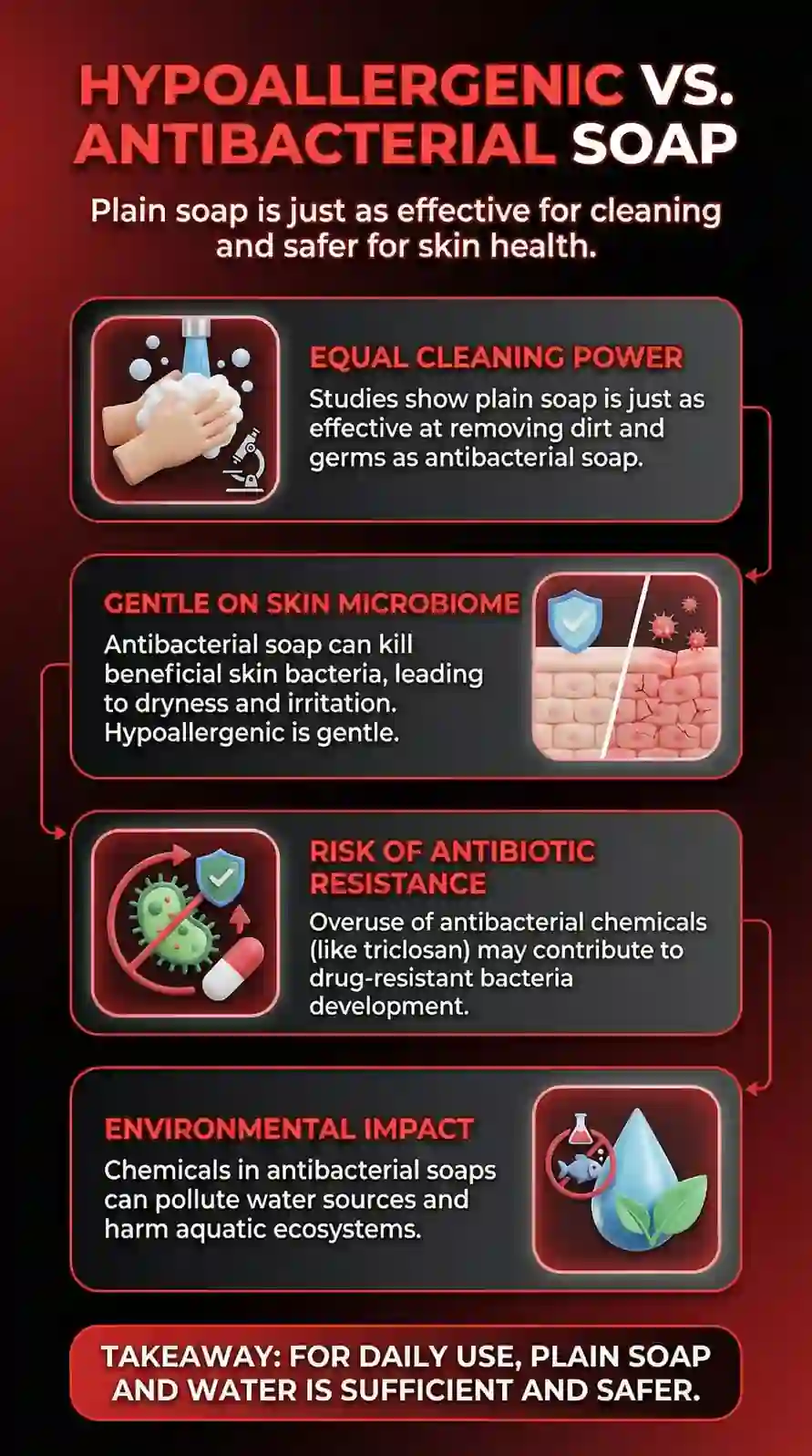
FAQ on Hypoallergenic Hand Soap
Q: What is the difference between antibacterial and hypoallergenic hand soap?
A: We spent two years inside this question — as clinicians, formulators, and parents who tried both categories on our own children.
What antibacterial soap does:
Uses chemical agents to kill germs on contact
Leaves dead residue and harsh chemicals on skin after every wash
Two most common active ingredients banned by FDA in 2016
Solves for germ kill — ignores everything else
What hypoallergenic soap does:
Formulated without common sensitizers to protect the skin barrier
Carries a term the FDA has never regulated — any brand can use it without a single test
Reduces chemical irritation — but still requires the wet-dry cycle doing cumulative barrier damage
What neither category told us:
Our daughter reacted to products carrying both claims simultaneously
Labels described marketing positions — not clinical standards
The more important question was never which category was better
It was whether water-dependent handwashing was the right approach for skin that needed to stay intact
Q: Does hypoallergenic hand soap actually work for sensitive skin?
A: It depends entirely on what is in the bottle — not what the label says. We learned this the hard way.
What we found after pulling ingredient lists on every product our children reacted to:
Every known sensitizer we were trying to avoid appeared in at least one "hypoallergenic" product
Hidden fragrances behind "parfum" — one entry concealing dozens of undisclosed compounds
SLS stripping the skin barrier on the same label promising gentleness
Self-declared claims with zero independent verification
What a formula that actually works for sensitive skin requires:
Fragrance-free — not just unscented
SLS-free, alcohol-free, paraben-free, dye-free
pH-balanced between 4.5 and 5.5
Independently verified by third-party laboratory testing — not internal brand claims
What our daughter's skin taught us that ingredient lists confirmed:
Gentle chemistry alone was not enough
Wet-dry cycle triggered barrier damage regardless of how clean the formula was
Her skin only stopped reacting when we eliminated every sensitizer and the wash-and-dry cycle simultaneously
Both changes were required — neither alone was sufficient
Q: Is hypoallergenic hand soap safe for children and babies?
A: Not automatically. This is the distinction we wish someone had made clear before our daughter's first reaction.
What the regulatory reality looks like:
"Hypoallergenic," "baby safe," and "newborn gentle" have no federal regulatory definition
Any brand can use these terms without clinical testing or independent verification
We used products carrying every available gentle claim — our daughter's skin still reacted
What the science confirmed and made personal:
Newborn skin barrier is structurally incomplete for up to two years after birth
Infant skin absorbs more and defends less throughout that entire window
Every ingredient on a caregiver's hands transfers to developing skin dozens of times daily
60% of all eczema cases develop in the first year of life
Peak vulnerability and peak caregiver handwashing frequency occur in the same window
What genuinely safe looks like — the standard we built NOWATA around:
Zero synthetic fragrances, SLS, alcohol, parabens, and dyes
Independent third-party lab verification — not self-declared
No wet-dry cycle — waterless application eliminates the mechanical trigger
Formulated by physicians who use it on their own children first
Every batch tested on our own children before anyone else's
Q: How do I know if a hand soap is truly hypoallergenic?
A: We asked this question for two years before we had an answer we trusted.
Step 1 — Ignore the front of the label entirely:
"Hypoallergenic," "gentle," "dermatologist tested," and "natural" are unregulated
No testing required. No standard to meet. No verification mandated.
We trusted all of them. None of them protected our children.
Step 2 — Read the ingredient list as a clinician would:
No synthetic fragrances — "parfum" can hide dozens of undisclosed allergens
No SLS or SLES — strips the skin barrier with every wash
No alcohol or ethanol — compounds barrier damage with repeated use
No parabens, artificial dyes, or formaldehyde-releasing preservatives
pH between 4.5 and 5.5 — matched to skin that needs to stay intact
Step 3 — Verify efficacy independently:
Third-party lab testing — not internal brand claims
Specific protocols cited — ASTM E1174 or equivalent medical-grade standard
Named laboratory results — not general statements
Step 4 — Apply the standard we apply to our own formula:
If we would not use it on our own children without reading the ingredient list first — it does not belong in our bottle
Every NOWATA ingredient evaluated against published sensitization research
Every efficacy claim verified by independent Swiss laboratory testing
Tested on our own children before we offered it to anyone else
Q: Why does my skin still react to soaps labeled hypoallergenic?
A: Because "hypoallergenic" has never been required to mean anything. And because the formula may not be the only problem.
What we discovered when our daughter kept reacting to products we trusted:
Reason 1 — The formula still contains sensitizers:
FDA does not regulate "hypoallergenic" — no testing required to use the term
Hidden fragrances behind "parfum" and "natural fragrance" entries
SLS and harsh surfactants stripping the barrier with every wash
Parabens, dyes, and preservatives carried over from conventional formulations
We found every one of these in products our children reacted to — products carrying full hypoallergenic claims on the front
Reason 2 — The wet-dry cycle is the trigger the formula cannot fix:
NIH research: 8 to 10 washes daily raises hand eczema risk by 51% — regardless of soap type
Every traditional wash requires wetting, lathering, rinsing, and drying
That cycle strips natural oils and compromises the skin barrier with every repetition
No hypoallergenic formula addresses the mechanical damage the cycle itself creates
What finally worked for our daughter — and what we built NOWATA around:
Eliminated every known sensitizer from the formula
Eliminated the wet-dry cycle with waterless clumping technology
Independently verified 99.9% germ removal — gentle did not mean a compromise on clean
Both changes were required — chemistry alone was never going to be enough
If your skin is still reacting to hypoallergenic soap, the label is not the problem. The premise behind traditional handwashing may be.